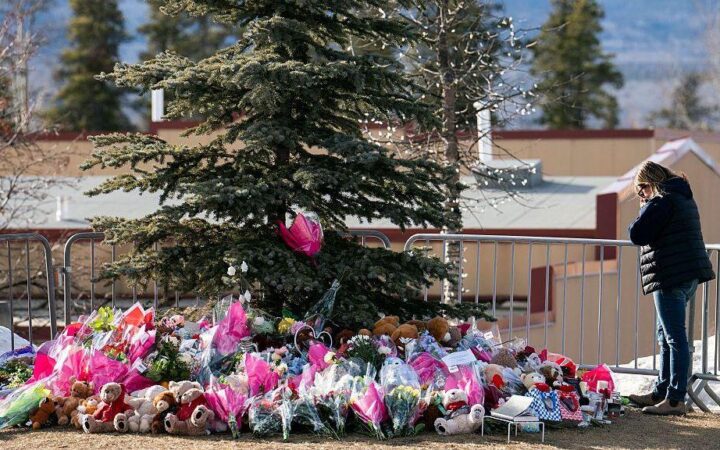
Eight people were killed when a small plane crashed near the Cape Newenham Long Range Radar Site on Alaska’s southwestern coast, Headline USA reported. Two of the victims were employees of the U.S. Army Corps of Engineers (USACE). The two pilots and six passengers have not yet been publicly identified.
A remote mission ends in tragedy
According to Headline USA, the twin‑engine Cessna 441 departed Anchorage and was headed about 450 miles west to the Cape Newenham Long Range Radar Site Airport when it crashed around midday Thursday. The airport serves a private military installation managed by the Pacific Air Forces Regional Support Center, part of a network that tracks aircraft operating in Alaska’s airspace and along its borders, per an Alaskan Command statement cited by Headline USA.
Rapidly changing weather
Carrie Haisley, meteorologist in charge of the National Weather Service’s Alaska sector operations center, told Headline USA an automated site near the airport showed low clouds and fog with roughly 10 miles of visibility shortly before the crash. An update roughly 15 minutes after the crash showed visibility had dropped to less than a quarter‑mile.
A difficult strip at a Cold War outpost
The radar site, built in the 1950s for early warning of a Soviet missile attack, sits above a gravel airstrip on a mountain slope, Headline USA reported. Today, it monitors skies off Alaska’s coast in the direction of Russia, North Korea, and China. Headline USA also reported the Federal Aviation Administration recommends pilots use GPS and other instruments when landing at the site.
Victims included Army Corps team
USACE said the two employees aboard were part of a “project delivery team en route to a project site,” according to Headline USA. Lt. Gen. Robert Davis, commander of Alaskan Command, the Alaskan NORAD Region and Eleventh Air Force, called those on board “dedicated professionals carrying out a vital mission in a demanding environment.” He added, “This is a devastating loss for our military family and the communities we serve.”