
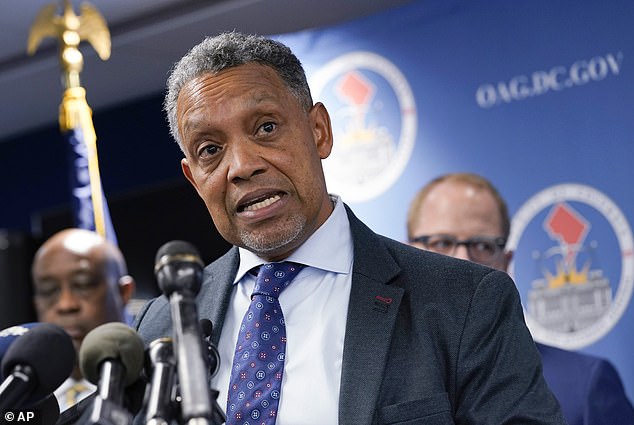
If you’ve ever ordered through Grubhub, you might be in for a slice of a recent $3.5 million settlement levied against the food order app for its deceitful marketing practices. Charging hidden fees to your customers isn’t exactly a good business practice, and now the Attorney General for Washington D.C., Karl Racine, is making Grubhub foot the bill.
Under the terms of the settlement, Grubhub will pay affected customers in the DC area a total of $2.7 million. Their cut will be credited to their accounts, and it will be sent to them as a check if it remains unused within 90 days. In addition, the company has to pay $800,000 in civil penalties to the District of Columbia and has to clearly mark additional fees people have to pay with their orders going forward.
No one likes to be tempted by the prospect of a cheap burrito and $0 delivery, only to start ringing up someone’s order and find a $4 “service fee,” $2 “small order fee,” and $1 “bag fee.” Which is linked to someone’s last order.
The practice is common not just on food delivery apps but on everything from plane, bus, and amusement park ticket-booking platforms to cable bills and car rentals.
Just like GrubHub, the company used these kinds of false advertising, such as “free delivery” to Grub Hub Plus subscribers, although the service actually charged hidden fees and used aggressive marketing tactics to get customers to order food delivery more often than they might have wanted to if they knew the truth about what they were paying.
Past customers of the food delivery service Grubhub are in for a nice start to the new year as settlement credits hit their accounts. As for anyone without an active account, A.G. Racine had this to say. “Those with active Grubhub accounts will receive a refundable credit and if the credit is not used within 90 days the money will be sent to customers in the form of a check.”
While it’s not the largest company fraud case to ever be settled successfully, customers of the once-popular delivery service will at least recoup some of the fees they shouldn’t have been charged. It also goes to the larger picture, putting other such companies on notice that trying to scam your customer base is not only illegal but also unethical and just bad business.
Should Grubhub survive the backlash, it might be a good idea to do a heavy review of its business marketing model and make some changes in the new year.
Leave a Comment