
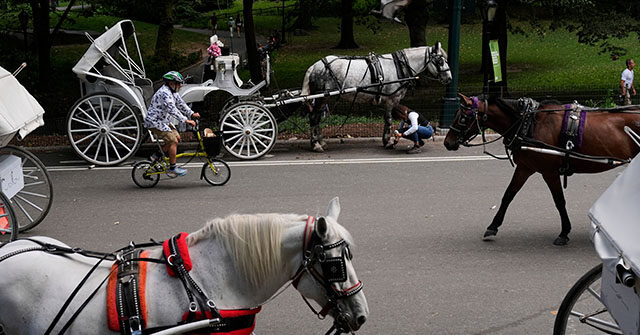
An 18-year-old tourist from India died after being thrown from a runaway horse-drawn carriage during a family visit to New York City’s Central Park.
Romanch Mahajan was riding with relatives near the Cherry Hill area shortly before 3 p.m. on June 17 when the horse pulling their carriage suddenly bolted. The carriage traveled down West Drive, struck the wheel of another carriage and overturned near Tavern on the Green.
Mahajan suffered a severe head injury when he hit the pavement. Emergency personnel transported him to NewYork-Presbyterian/Weill Cornell Medical Center in critical condition, but he died several hours later.
His mother was also thrown from the carriage but survived. Other family members declined medical treatment at the scene.
The Mahajan family had traveled to New York to celebrate Romanch’s recent high school graduation. His father said the teenager fell while attempting to help his mother after she was thrown from the moving carriage.
Video recorded inside the park showed the horse running without the driver aboard and the carriage eventually tipping onto its side after approaching another horse-drawn vehicle.
Transport Workers Union Local 100, which represents the city’s carriage drivers, said the driver had stepped away from his position to take a photograph of the passengers. Union Administrative Vice President Alexander Kemp said the driver appeared to be at least an arm’s length away when the horse began running.
Kemp emphasized that carriage operators are not supposed to leave their vehicles to photograph customers.
The carriage owner suspended the driver indefinitely following the incident. The horse, a seven-year-old named Sampson, was removed from service and retired. The animal had reportedly worked in Central Park for only about six weeks and was not believed to have sustained serious injuries.
Exactly what caused Sampson to bolt remains disputed.
Early reports said the horse became frightened for an unknown reason. The union later suggested that stray electrical voltage near Cherry Hill might have startled the animal. Con Edison subsequently detected low voltage in the area but disputed that its equipment caused the accident.
Mahajan’s family has filed notices of claim seeking $105 million from New York City and several municipal agencies. Such notices are required before a lawsuit can be brought against the city. The family’s attorneys contend that officials had received previous warnings about electrical conditions in the park and failed to protect visitors.
No court has determined responsibility for the accident, and the city has not accepted the family’s allegations.
The fatality intensified a longstanding dispute over the future of Central Park’s horse-carriage industry. The Central Park Conservancy renewed its demand that the rides be permanently eliminated, describing Mahajan’s death as an unacceptable consequence of operating carriages in one of the country’s busiest public parks.
Industry representatives have argued that thousands of rides occur safely and that targeted reforms would provide better protection than a ban.
The union temporarily halted carriage operations after the accident and conducted additional safety training. It has endorsed tougher driver examinations, practical proficiency tests, stricter procedures for introducing new horses and the installation of additional hitching posts throughout the park.
City lawmakers have also considered legislation now known as “Romanch’s Law,” which would phase out horse-drawn carriage rides and establish transition assistance for affected workers.
Mahajan is believed to be the first person killed in a Central Park carriage accident during the attraction’s approximately 150-year history. His death occurred just eight days after another carriage horse collapsed and died in the park after ingesting a toxic ornamental plant.


